Nigeria’s mining sector is attracting serious international attention, but getting in the right way matters as much as getting in early. Mineral titles, community agreements, environmental approvals and the new local-processing requirement all shape whether an investment is secure and bankable. This guide explains how to invest in mining in Nigeria, step by step. It covers the legal framework, the main mineral titles, the entry structures international investors use, and the due diligence that separates sound opportunities from costly mistakes.
Key takeaways
- All minerals in Nigeria are vested in the Federal Government. Rights to explore and mine are granted as mineral titles under the Nigerian Minerals and Mining Act 2007.
- Titles are administered by the Mining Cadastre Office (MCO) and are held through companies incorporated in Nigeria. Full foreign ownership is permitted.
- A valid title is not enough on its own. Landowner consent, a Community Development Agreement and environmental approvals are essential, and Nigerian courts have invalidated licences that lacked them.
- New mining titles must now be backed by a local processing plan.
- Independent verification of title, geology and community standing should come before any significant capital commitment.
1. Understand the legal foundation
Section 44(3) of the 1999 Constitution vests the ownership and control of all minerals in Nigeria in the Federal Government. The Nigerian Minerals and Mining Act 2007 and the Nigerian Minerals and Mining Regulations 2011 set out how rights to those minerals are granted, held and transferred. Three institutions matter most to investors:
- The Ministry of Solid Minerals Development sets policy and, since 2024, issues ministerial consent for transfers of mineral titles.
- The Mining Cadastre Office receives applications, grants titles and keeps the public register of titles.
- The Mines Environmental Compliance Department approves environmental impact assessments, mitigation plans and Community Development Agreements.
Since 1 January 2026, mineral royalties have been administered by the Nigeria Revenue Service under the Nigeria Tax Act 2025.
2. Know the main types of mineral title
| Title | Purpose | Key terms |
|---|---|---|
| Reconnaissance Permit | Early, non-exclusive surface investigation | One year, renewable annually |
| Exploration Licence | Exclusive exploration of a defined area | Three years, renewable twice for two years each. Maximum 200 km² |
| Small-Scale Mining Lease | Small-scale mining operations | Between 5 acres and 3 km². Generally reserved for Nigerian citizens and Nigerian-controlled companies |
| Mining Lease | Large-scale mining, based on a feasibility study | 25 years, renewable every 24 years. Maximum 50 km² |
| Quarry Lease | Extraction of quarriable minerals such as granite and limestone | Granted for quarrying operations |
| Water Use Permit | Use of water for mining operations | Issued alongside mining titles |
Investors who intend to buy and export minerals also need the appropriate licences to possess or purchase minerals and permits for each export. Under Nigerian law, purchasing minerals without a valid licence is prohibited.
3. Choose the right entry structure
International investors typically enter the Nigerian mining sector in one of four ways:
Incorporate a Nigerian company
Mineral titles are held by entities incorporated in Nigeria, so most investors establish a local company registered with the Corporate Affairs Commission. Foreign capital should be brought in through authorised channels and documented with a Certificate of Capital Importation. This supports the later repatriation of dividends and capital.
Form a joint venture with a licence holder
Many prospective areas are already held by Nigerian licence holders. A joint venture combines the local partner’s title, access and relationships with the investor’s capital and technical capability. It is often the fastest route to a credible project, provided the arrangement is properly documented and authorised. State governments also participate in mining through incorporated vehicles and joint ventures.
Acquire an interest in an existing title
Investors can acquire an existing title or an interest in a title-holding company. Transfers require ministerial consent. Thorough diligence is essential, because thousands of dormant or non-compliant titles have been revoked in recent years.
Supply, offtake or processing partnerships
Under Nigeria’s value-addition policy, not every investor needs to mine. Supplying finance, processing capacity, equipment or offtake for processed minerals can be an attractive way to participate, and the policy actively favours it.
4. Do the due diligence that protects your investment
Most problems in Nigerian mining investments can be traced back to diligence that was skipped. Before committing significant capital, investors should confirm the following:
- Title status. Verify the title directly with the Mining Cadastre Office. Confirm it is valid, in good standing, current on annual service fees, and covers the minerals and area claimed.
- Ownership and authority. Confirm who owns the title-holding company and that the counterparty is authorised to deal.
- Surface rights and landowner consent. Mineral rights and surface rights are separate. Landowner consent and fair compensation must be properly secured.
- Community Development Agreement. The Act requires a Community Development Agreement with host communities before mining development. In Multiverse Mining v. Ishaka (Court of Appeal, 2025), a licence was invalidated where community consent, a CDA and an environmental impact assessment were lacking.
- Environmental approvals. Environmental impact assessments, mitigation plans and rehabilitation programmes must be approved by the Mines Environmental Compliance Department.
- Local processing plan. The ministry has stated that it no longer issues mining titles without a concrete local processing plan. Factor processing into the project from day one.
- Independent technical verification. Treat historic geological information as indicative. Commission independent exploration, sampling and technical reporting before relying on any grade or tonnage figure.
- Security and infrastructure. Assess site security, access roads, power and water, and budget for supporting infrastructure where it is needed.
- Tax, royalty and foreign exchange. Take specialist advice on royalty rates, tax incentives under the Nigeria Tax Act 2025, and the repatriation of funds.
- Dispute resolution. Agree clear dispute-resolution mechanisms. The Act encourages amicable settlement, and international arbitration clauses are common in investment agreements.
5. Plan for responsible development
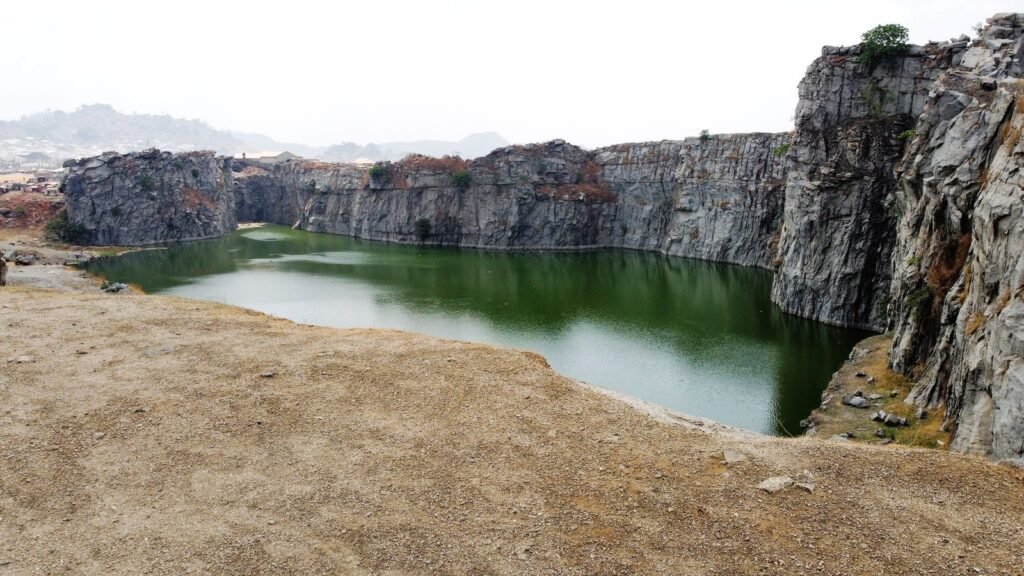
The photograph above shows Crush Rock in Mpape, Abuja, a former quarry that supplied stone for building Nigeria’s capital and is now a flooded pit. Legacy sites like this are a reminder of why environmental planning, rehabilitation and community engagement belong in every project plan from the outset.
Responsible development is increasingly what makes a project viable. It shapes regulatory approvals, community support, access to international finance and acceptance by buyers whose own supply chains face scrutiny. You can read more about CMR’s approach on our Responsible Development page.
Common mistakes to avoid
- Relying on photocopies of titles instead of verifying them with the Mining Cadastre Office.
- Paying for “access” without a properly authorised and documented agreement.
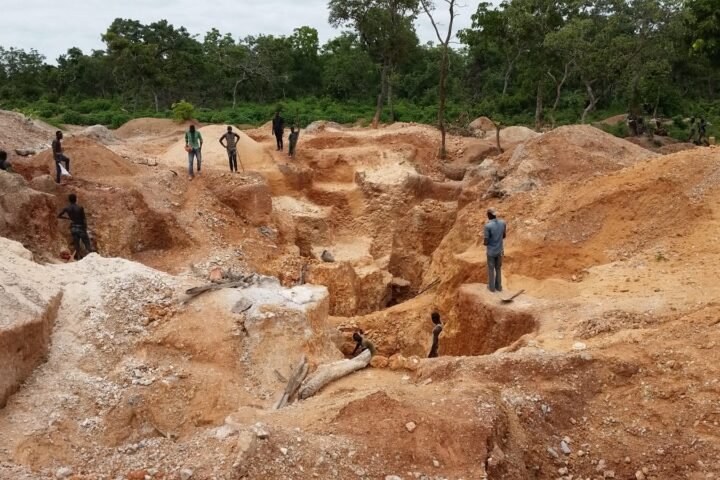
- Treating artisanal workings or informal sample results as proof of a resource.
- Leaving community engagement until after operations have started.
- Planning to export raw ore without a processing route.
- Trusting anyone who claims political influence or privileged regulatory treatment. Credible projects rest on compliance, not connections.
How CMR helps international investors
Confucius Mining Resources Ltd is an Abuja-based solid minerals mining and investment company built around one idea: One Trusted Partner. Multiple Opportunities.
Through established relationships with licence holders, resource owners, technical specialists and strategic partners, CMR coordinates opportunities that would otherwise require investors to manage many separate relationships. We support structured evaluation, partnership development and responsible project development, from first conversation to agreed commercial framework. We also work alongside the investor’s own legal, technical and financial advisers.
Explore what we do, or discuss a partnership or joint venture with our team.
Frequently asked questions
Can a foreign company hold a mining licence in Nigeria?
Mineral titles are held through companies incorporated in Nigeria. A foreign investor can own such a company outright, because full foreign ownership is permitted. Small-scale mining leases are generally reserved for Nigerian citizens and Nigerian-controlled companies.
How long does a mining lease last in Nigeria?
Under the Nigerian Minerals and Mining Act 2007, a mining lease runs for 25 years and is renewable every 24 years, subject to the conditions of the Act. It covers an area of up to 50 km².
What is a Community Development Agreement?
A Community Development Agreement is a binding agreement between a mineral title holder and its host community. It sets out commitments on matters such as education, employment, infrastructure and environmental protection. It is required before mining development and has been decisive in court cases on licence validity.
Do I need a local partner to invest in Nigerian mining?
It is not legally required for most titles. In practice, an experienced local partner greatly reduces the time, cost and risk of verifying titles, engaging communities and coordinating technical and commercial relationships.
This article is for general information only and does not constitute investment, legal or tax advice. It reflects the position at the time of writing (October 2026). Laws, regulations and fiscal terms change, so investors should take independent legal, tax and technical advice before acting.
Sources
- Nigerian Minerals and Mining Act 2007 (full text, FAOLEX)
- Aluko & Oyebode: Nigeria’s Critical Minerals Moment (2026)
- Mondaq: How foreign companies can legally buy minerals in Nigeria
- Tope Adebayo LP: Nigeria Mining Sector 2026 Mid-Year Report
- Channels Television: Minister on the local processing requirement (July 2026)
- Nigerian Investment Promotion Commission: Mining sector
A valid title is not enough on its own. Landowner consent, a Community Development Agreement and environmental approvals are what make a Nigerian mining investment secure.
Interested in working with CMR?
Discuss a Partnership or Joint Venture