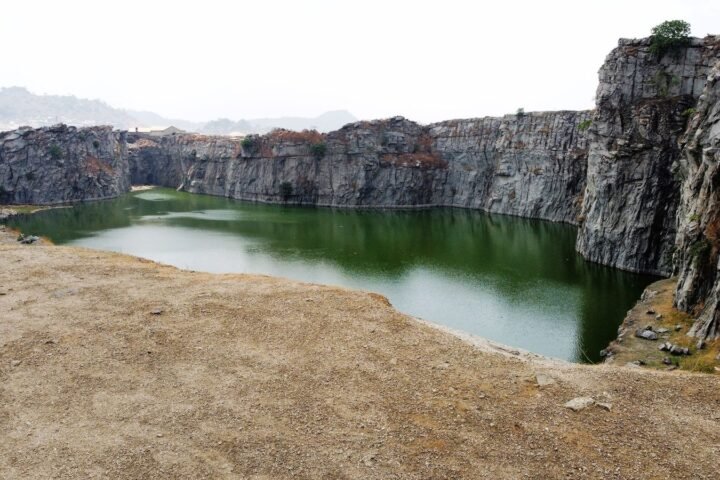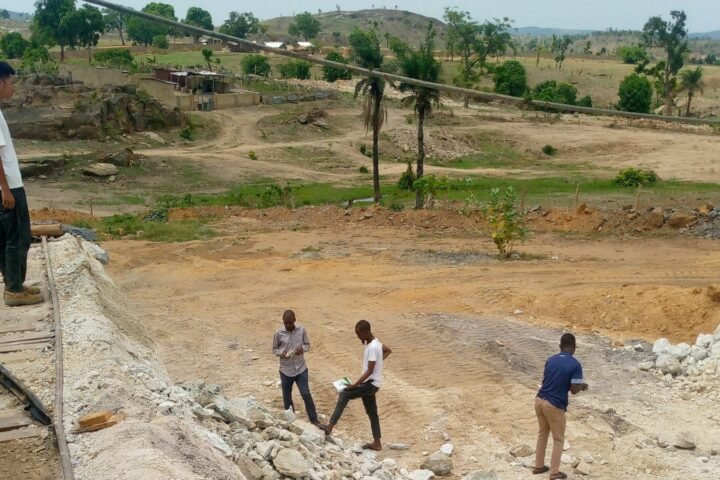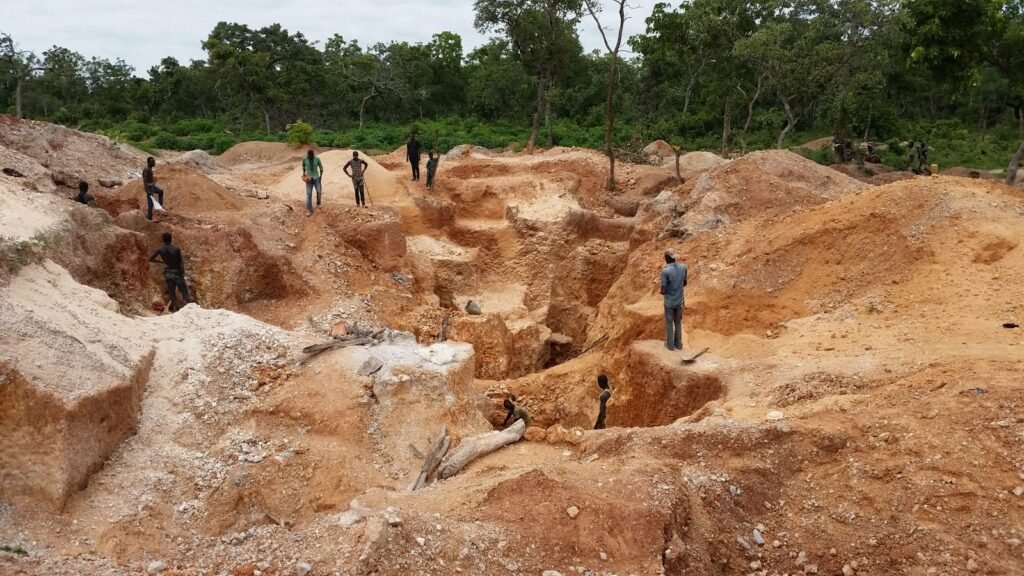
Nigeria’s solid minerals sector is moving faster than at any point in the last two decades. Government revenue from the sector has more than quadrupled since 2023, solid mineral exports almost doubled in the first half of 2026, and large-scale processing plants are now being commissioned on Nigerian soil. For investors looking at mining investment opportunities in Nigeria, the question is no longer whether the opportunity exists. It is how to take part in it responsibly, with the right structure and the right partners.
This article sets out what is driving the momentum, where the opportunities sit across the mineral spectrum, which risks deserve honest attention, and how a well-structured entry can help.
Key takeaways
- Federal revenue from solid minerals rose from about ₦16 billion in 2023 to ₦68.1 billion in 2025.
- Solid mineral exports reached ₦249.7 billion in H1 2026, up 83% on H1 2025 (National Bureau of Statistics data).
- Nigeria hosts over 44 mineral types across more than 500 locations, according to the Ministry of Solid Minerals Development.
- A national value-addition policy now ties new mining titles to local processing plans, creating opportunities further up the value chain.
- Infrastructure, security, data gaps and regulatory diligence remain real considerations, and they make local expertise valuable.
The numbers behind the momentum
For many years, mining was the overlooked part of Nigeria’s economy, overshadowed by oil and gas. That picture is changing, and the change is visible in official figures.
Revenue. The Ministry of Solid Minerals Development reports that sector revenue grew from roughly ₦16 billion in 2023 to ₦38 billion in 2024 and ₦68.1 billion in 2025, a 79% rise in a single year. The ministry links this growth to tighter administration of mineral titles, improved royalty collection and a crackdown on illegal mining.
Exports. According to National Bureau of Statistics foreign trade data analysed by Nairametrics, solid mineral exports reached ₦249.7 billion in the first half of 2026, compared with ₦136.2 billion in the same period of 2025. June 2026 alone recorded ₦57.2 billion. Solid minerals are still a small share of total exports, which is exactly why the growth headroom is significant.
Resource base. Nigeria’s geology is notably diverse. The ministry identifies more than 44 mineral types in exploitable quantities across more than 500 locations. They range from battery and technology minerals such as lithium, tin and tantalum, to gold and gemstones, to industrial minerals such as barite, limestone and kaolin. The Nigerian Investment Promotion Commission reports deposits in 32 of the country’s 36 states.
From raw ore to processed product: the value-addition shift
The most important policy change for investors is Nigeria’s insistence on local value addition. The federal government’s position is clear: minerals should be processed in Nigeria before they are exported. Speaking at the July 2026 commissioning of a major lithium plant, the Minister of Solid Minerals Development, Dele Alake, said the ministry no longer issues mining titles or licences without a concrete local processing plan.
That plant shows the policy in practice. The Diamond New Energy lithium processing facility at Endo, in Nasarawa State, was built with an investment of around $250 million and is designed to handle about 6,000 tonnes of lithium ore per day. The state government reported more than 1,000 direct jobs and over 2,000 indirect jobs. A high-purity gold refinery in Lagos also became operational in January 2026, with further refineries in development.
For investors, value addition changes the shape of the opportunity. Beyond extraction, there is growing demand for:
- reliable, traceable feedstock supply to new processing plants;
- beneficiation and concentration capacity close to mining clusters;
- logistics, power, laboratory and technical services that support processing; and
- partnerships that combine local resource access with international processing, finance and market expertise.
Where the opportunities sit
Strategic and technology minerals
The global energy transition has put lithium, tin (cassiterite), columbite–tantalite and copper at the centre of supply-chain strategies worldwide. Nigeria’s pegmatite belts, which run through states including Nasarawa, Kogi, Kwara, Oyo, Ekiti and the Federal Capital Territory, host many of these minerals. Lithium has attracted the most attention, and reported foreign and private investment in Nigeria’s mining sector now exceeds $2 billion, much of it in lithium.
Precious and gem minerals
Gold occurs across several northern and south-western states. Much of it has historically been worked by artisanal miners outside the formal economy. Formalisation, domestic refining and traceability initiatives are opening space for structured, compliant gold supply chains. Nigeria also hosts gemstones such as tourmaline and beryl.
Industrial and construction minerals
Often overlooked, industrial minerals serve large and steady domestic markets. Barite is used in oil and gas drilling, limestone feeds cement production, and granite and aggregates support construction and infrastructure. Import substitution is a recurring theme here, because Nigerian industry has historically imported materials that exist domestically.
You can explore the full range of minerals CMR works with in our Mineral Portfolio.
A stronger, still-evolving regulatory framework
Investor confidence depends on rules that are clear and enforced. Recent reforms point in that direction:
- Title clean-up. The ministry revoked 1,633 mineral titles in late 2023 for unpaid annual service fees and a further 924 dormant titles in early 2024, freeing acreage for active operators.
- Enforcement. A dedicated Mining Marshals unit was launched in 2024 to tackle illegal mining, and satellite-based surveillance of mining sites is being rolled out.
- Community protection. Revised Community Development Agreement guidelines require meaningful host-community engagement before mining proceeds.
- Fiscal administration. Under the Nigeria Tax Act 2025, royalty collection moved to the Nigeria Revenue Service from 1 January 2026, alongside revised royalty rates for several minerals.
The framework is still evolving. Several mining bills are before the National Assembly, and fiscal incentives were restructured under the new tax law. Investors should take specialist legal and tax advice on the rules that apply to their structure.
The risks worth pricing in
A credible investment case also names the risks. In Nigeria’s mining sector, the main ones are well understood:
- Infrastructure. Power, roads and water can be limited near deposits, so project budgets often need to cover supporting infrastructure.
- Geological data. Historic data is often indicative rather than bankable. Independent exploration and verification are essential before major capital is committed.
- Illegal mining and security. Illegal mining remains a significant challenge in some areas, so site security and community relationships matter.
- Title and land diligence. Mineral rights and surface rights are separate. Titles must be verified, and landowner and community consent must be properly secured.
None of these risks is unique to Nigeria, but each is easier to manage with experienced local relationships and professional commercial management.
How CMR helps investors take part
Confucius Mining Resources Ltd is a solid minerals mining and investment company headquartered in Abuja. Our approach is summed up in one idea: One Trusted Partner. Multiple Opportunities.
Through established relationships with licence holders, resource owners, technical specialists and strategic partners, CMR coordinates opportunities that would otherwise require investors to manage many separate relationships. The investor or commercial partner engages with CMR, and CMR manages the complexity behind that relationship. That includes structured due diligence, partnership frameworks, community engagement and alignment with Nigeria’s value-addition priorities.
Nigeria has the resources. The opportunity is to develop them responsibly, professionally and in ways that create lasting economic value for investors, host communities and the country.
If you are evaluating an entry into Nigerian mining, start a conversation with our team.
Frequently asked questions
Can foreign investors own mining companies in Nigeria?
Yes. Nigerian policy permits full foreign ownership in the mining sector. Mineral titles are held through companies incorporated in Nigeria, so international investors typically set up a local company or enter a joint venture with an existing licence holder.
Which minerals offer the strongest opportunities in Nigeria?
Lithium and other battery and technology minerals currently attract the most international interest. Gold, tin and tantalum, and industrial minerals such as barite and limestone, also offer meaningful opportunities. The right choice depends on an investor’s strategy, risk appetite and time horizon.
Does Nigeria allow the export of raw minerals?
Government policy strongly favours processing before export, and new mining titles are now tied to local processing plans. Investors should plan for in-country beneficiation or processing as part of any project.
This article is for general information only and does not constitute investment, legal or tax advice. Figures are drawn from the sources below and were correct at the time of writing (October 2026). Investors should conduct their own due diligence and take independent professional advice.
Sources
- Nairametrics: Nigeria’s solid mineral exports rise to ₦249.7 billion in H1 2026 (NBS data)
- Vanguard via AllAfrica: Solid minerals revenue growth, 2023–2025
- Channels Television: 6,000-tonne-per-day lithium processing plant commissioned in Nasarawa
- Nigerian Investment Promotion Commission: Mining sector
- Tope Adebayo LP: Nigeria Mining Sector 2026 Mid-Year Report
Nigeria has the resources. The opportunity is to develop those resources responsibly, professionally and in ways that create sustainable economic value.
Interested in working with CMR?
Discuss an Opportunity